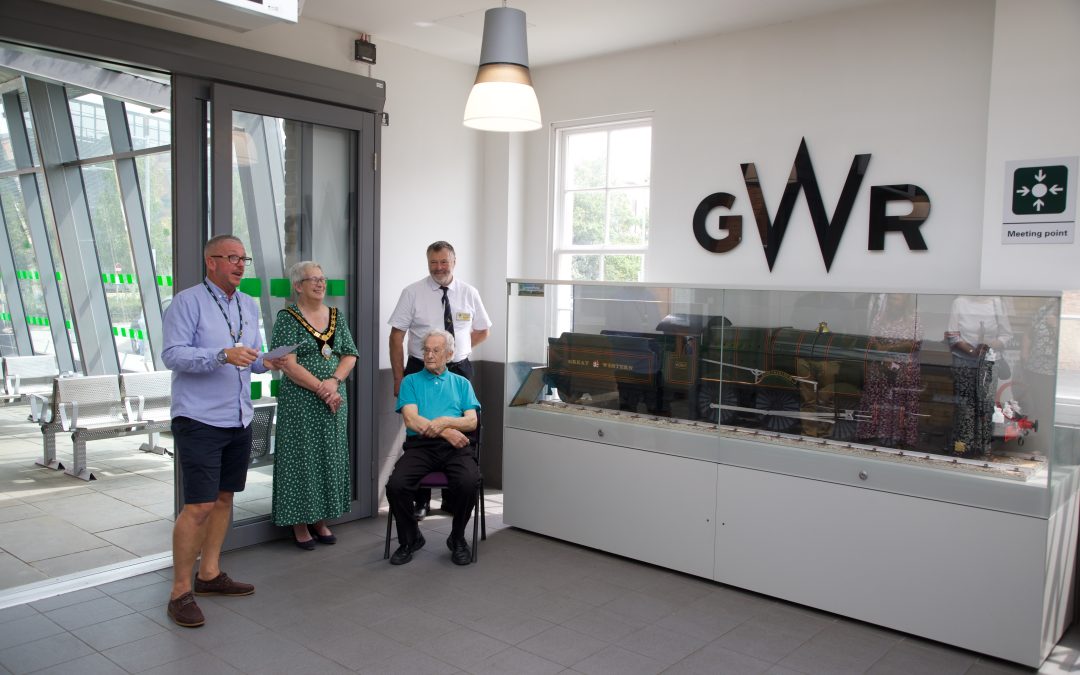
When Clive Goddard joined British Railways as a member of the station staff at Taunton in 1949, a year after the nationalisation of the railways and the forming of British Railways (BR) he could never have thought that seventy seven years later he would be the guest of honour at an unveiling ceremony there. Clive is almost certainly the last living member of the then Taunton station staff.
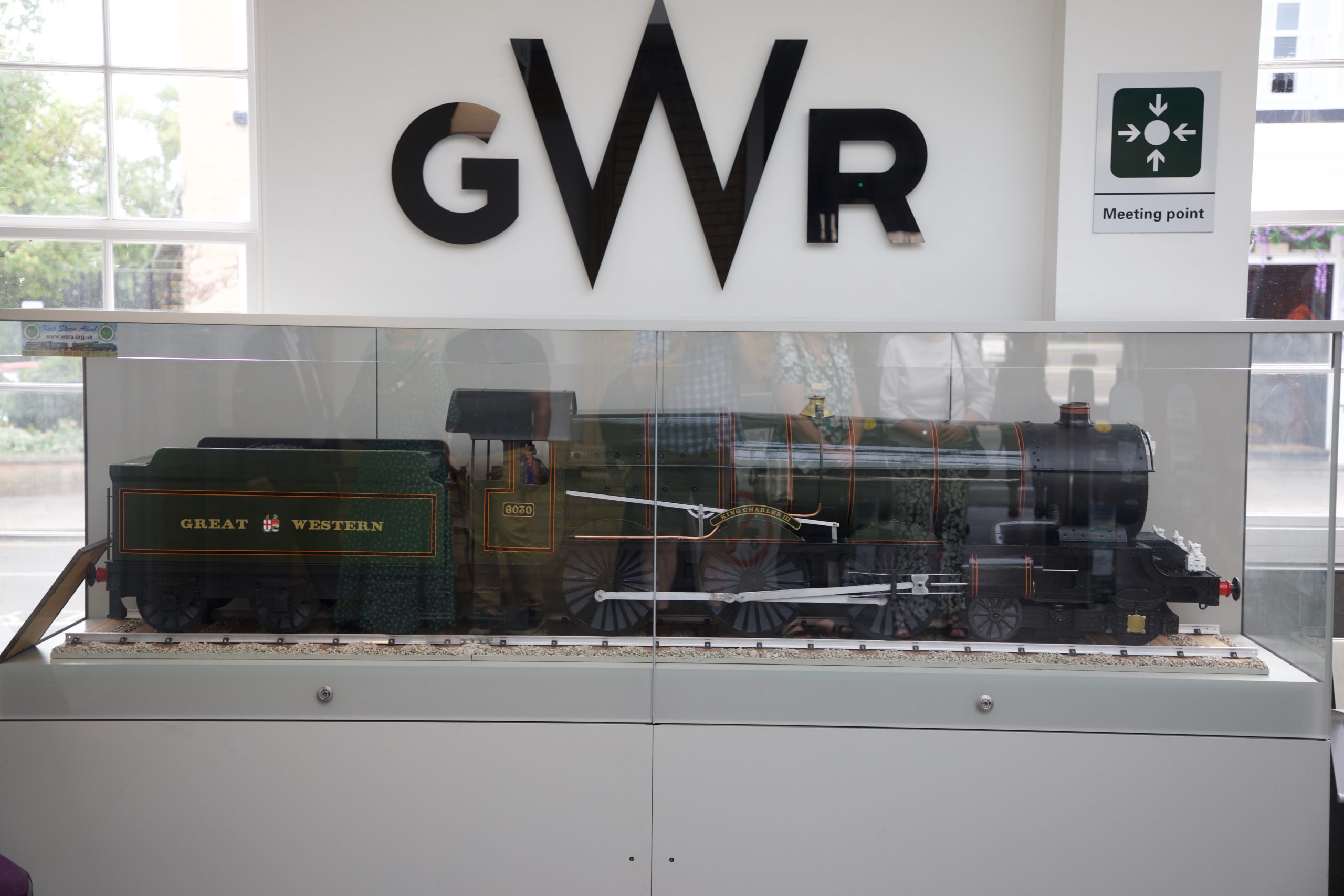
When he began his railway service little had changed from the pre-nationalisation Great Western Railway and the heaviest of the express trains passing by him in the telegraph office were headed by members of the “King” Class 4-6-0’s. Years after Clive retired he turned his hand to modelling one of these locomotives. and large scale result stands in pride of place in Taunton station’s entrance hall and booking office area of Taunton station. It has been constructed from recycled materials including some from alumlnium signs that were part of the flower beds on the station’s central platform. In anticipation of Prince Charles succeeding to the throne he named the model “King Charles III” and gave it the number 6030 (the last of the “King” class was 6029, originally named “King Stephen” and later “King Edward VIII”).
Which brings us to another of Clive’s talents. He established and maintained these flower beds at Taunton station, after his retirement, and in addition he was a leading light for many years in the work that ensured Bishops Lydeard station on the West Somerset Railway had attractive flower displays to welcome those arriving on the platforms. “Britain in Bloom” awards were earned by these efforts.
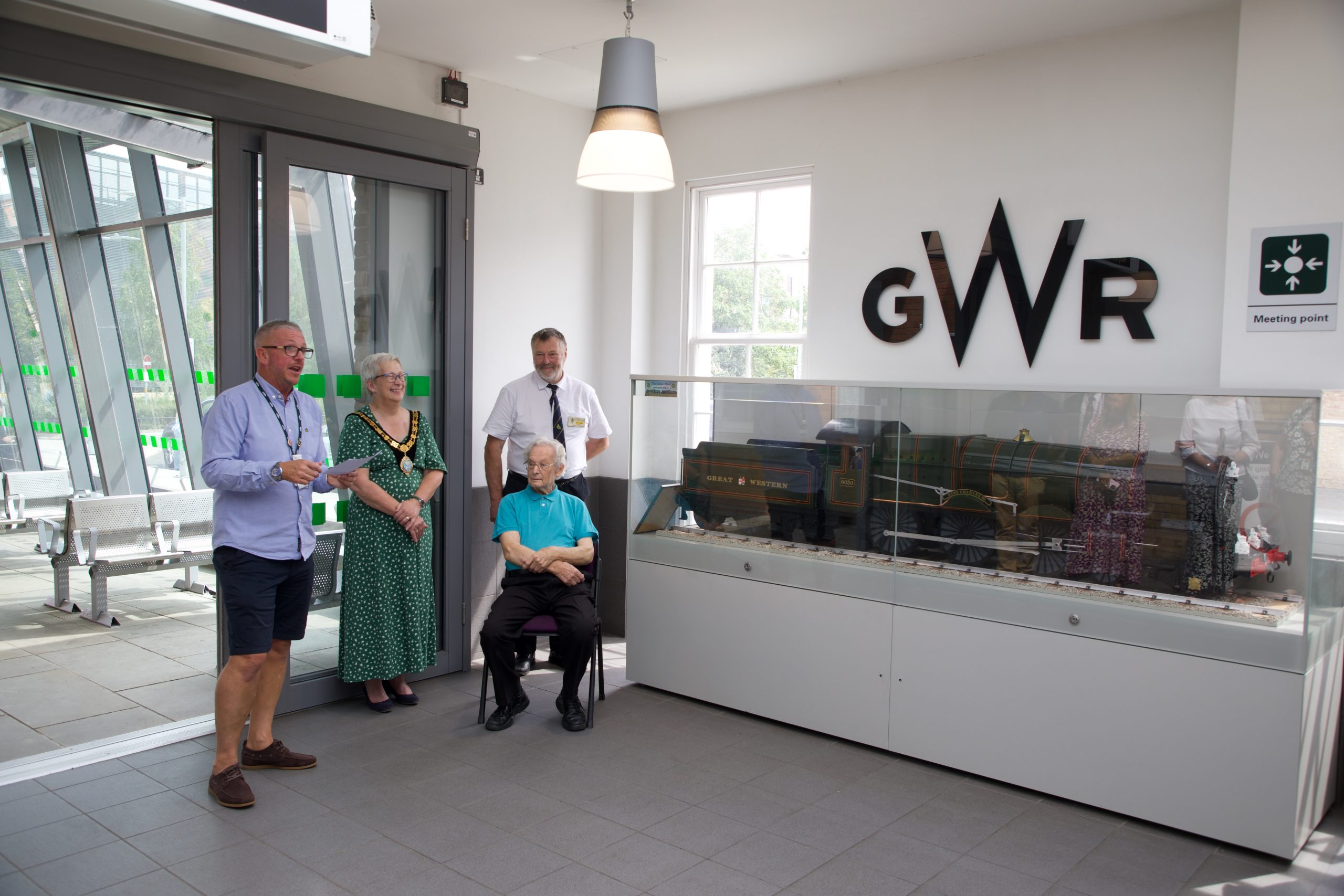
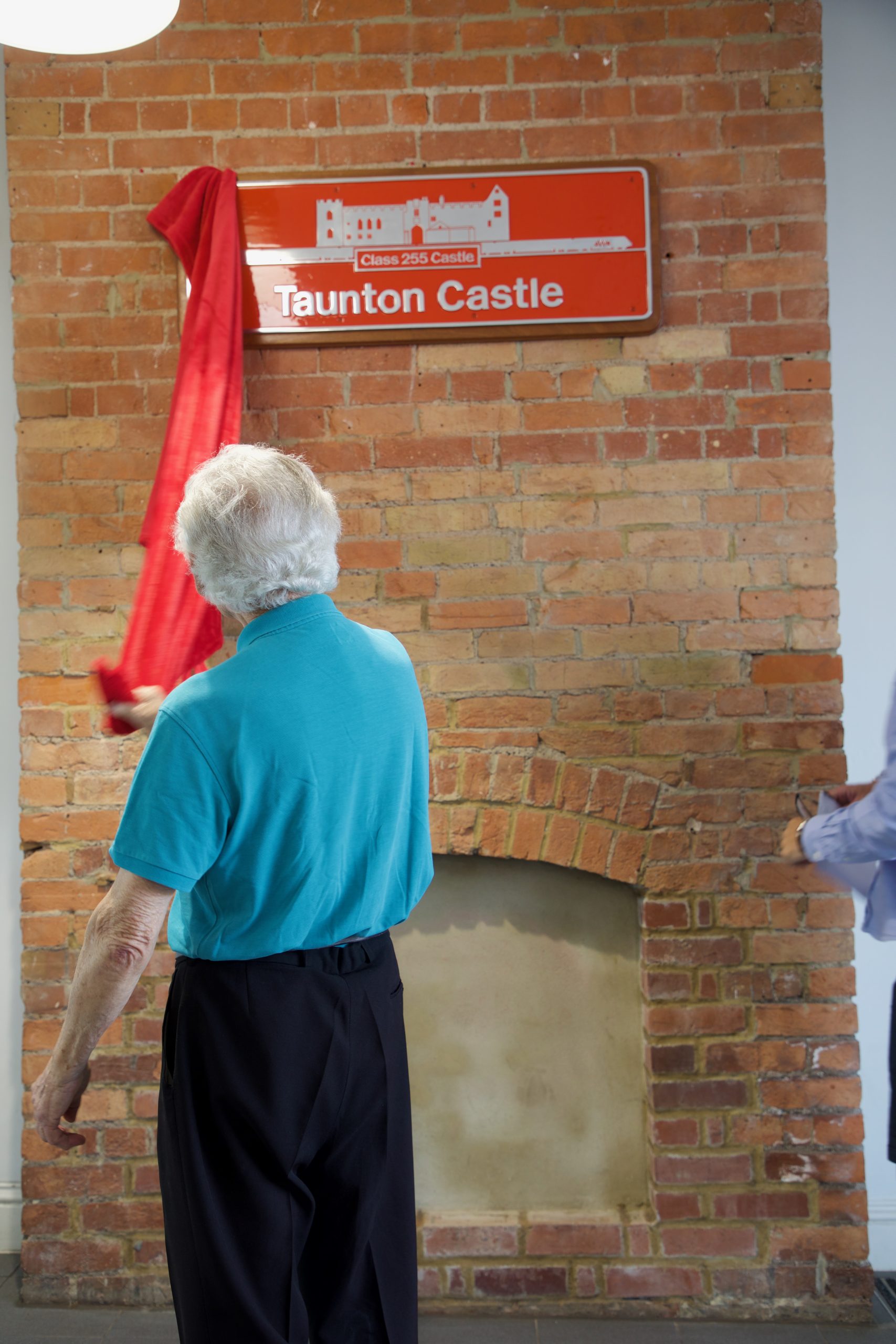
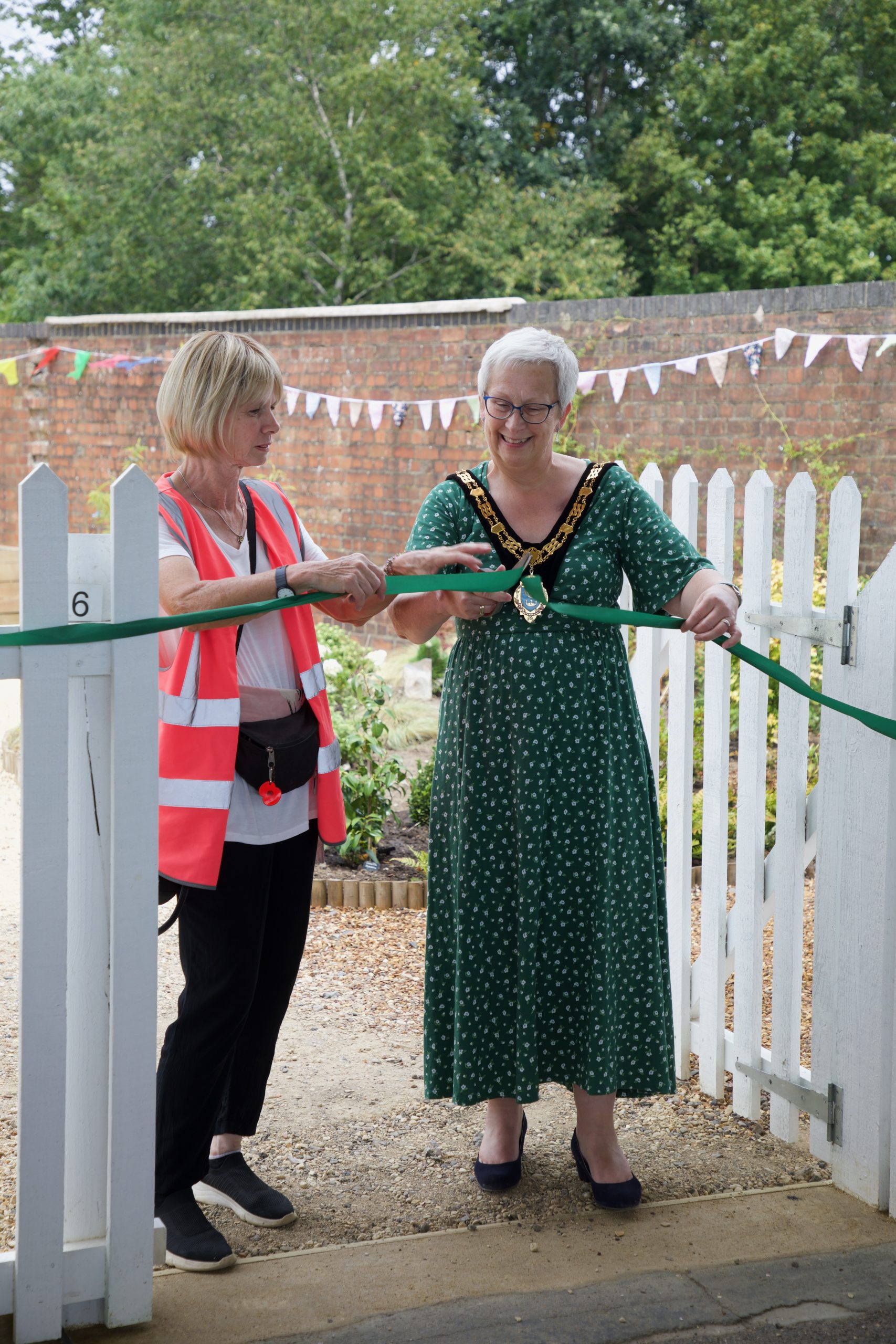
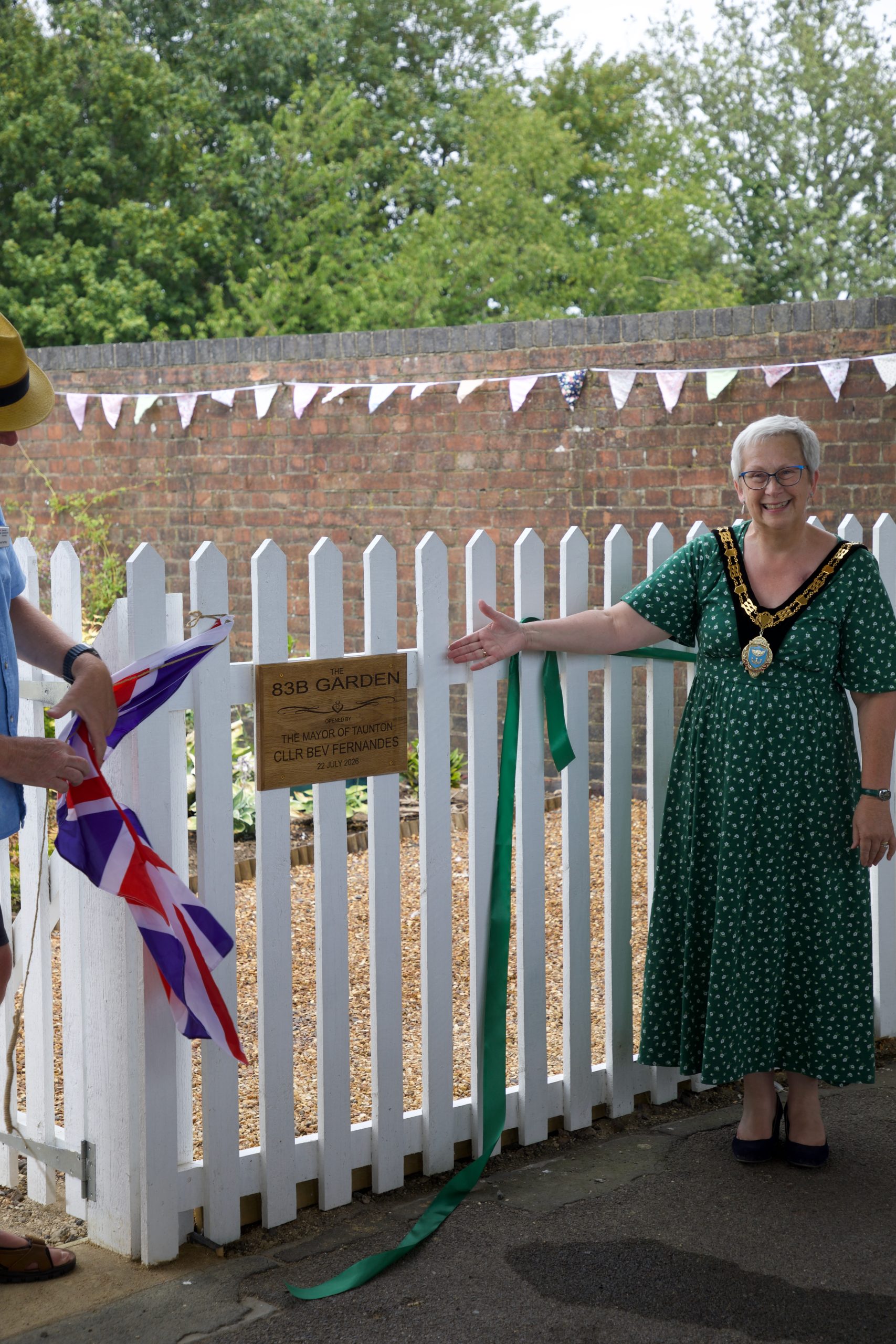
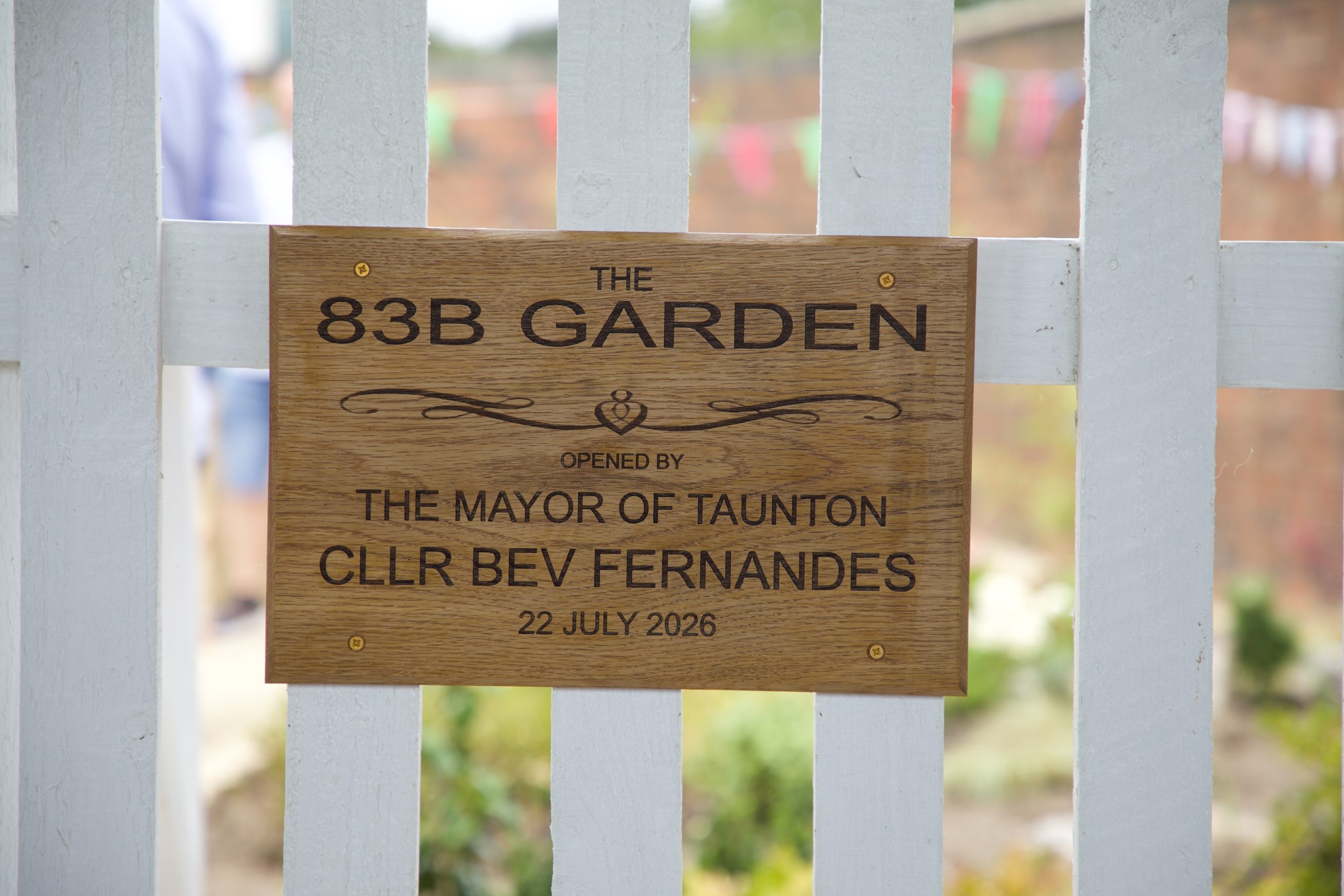
It was the “opening” of a new floral area at Taunton station that was the ostensible reason for Clive being asked to attend the station on the afternoon of July 22nd. What he was unaware of that he was also going to unveil the former nameplate carried by a Class 43 power car. When the modern day GWR bade goodbye to its HST trains it retained a number with a reduced number of carriages in the formation and dubbed them the “Castle” class. One of the power cars was named “Taunton Castle” and to his surprise Clive was asked to unveil one of the nameplates which is now plinth’ed and mounted in the booking office following the withdrawal of the power car. After the unveiling the attendees adjourned to the adjacent Great Western Hotel for light refreshments. Thanks go to Paul Finnimore and Joe Graham of GWR for making Clive’s special afternoon possible and to Newton Replicas of Derby who refurbished the nameplate.
As a final historical note. It was three years after Clive began his railway service that the express steam locomotive 7036 “Taunton Castle” emerged as a new build from Swindon Works. As the penultimate member of its class it had a short working life, the onset of dieselisation of British Railways leading to its withdrawal in 1963.
The new floral area is intended to offer a sensory experience. Occupying a large part of a former bay platform area adjacent to platform 5 at Taunton station it has a variety of plants intended to support insect life and seating to offer passengers a chance to relax.